

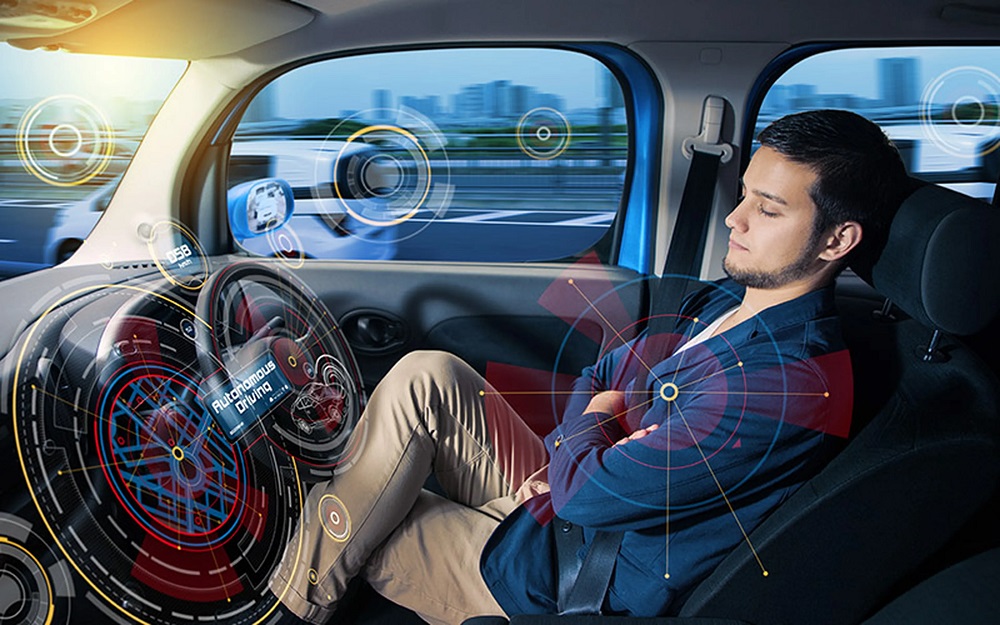
For over a century, automotive safety focused primarily on survival during an impact. The industry made monumental strides by perfecting structural architecture, crumple zones, seat belts, and multi-stage airbags. While these passive safety technologies have saved millions of lives, they only mitigate damage after a collision has already occurred.
Today, the automotive sector is undergoing a profound paradigm shift. The focus has decisively moved from crash survival to crash prevention. Driven by breakthroughs in sensor technology, artificial intelligence, and high-speed vehicular connectivity, modern automotive innovation aims to eliminate human error entirely. By transforming vehicles from passive mechanical shields into predictive, intelligent partners, engineers are constructing an ecosystem where traffic fatalities could eventually become a historical anomaly.
The Evolution of Passive to Active Safety Ecosystems
The foundation of modern automotive safety engineering relies on the integration of Active Safety Systems, commonly categorized under Advanced Driver Assistance Systems. These platforms act as a continuous, digital co-pilot, monitoring the environment with a speed and precision that human senses cannot replicate.
The primary mechanism of active safety involves a dense network of onboard perception technologies.
-
Radar Systems: Operating in various frequency bands, automotive radar sends out radio waves to track the distance, velocity, and relative angle of surrounding objects. Radar remains highly effective in low-visibility conditions like dense fog, heavy rain, or complete darkness.
-
Camera Networks: High-definition optical sensors mounted around the vehicle provide the visual inputs necessary for lane-keeping assistance, traffic sign recognition, and pedestrian detection algorithms.
-
LiDAR Integration: Light Detection and Ranging instruments use pulsing laser beams to construct highly accurate, three-dimensional point clouds of the vehicle surroundings in real time. This allows the vehicle computing platform to distinguish between a harmless plastic bag and a stationary object in the roadway.
By fusing the data from these disparate sensors, the vehicle creates a comprehensive, real-time map of its immediate environment, enabling active interventions like automatic emergency braking and evasive steering assist before a driver even realizes a hazard exists.
The Cognitive Power of Artificial Intelligence and Machine Learning
Hardware sensors are only as good as the software interpreting the incoming data stream. The core engine driving predictive safety is artificial intelligence, specifically deep learning neural networks. These algorithms process millions of data points every second, moving beyond simple object detection to true behavioral prediction.
In traditional systems, software operated on rigid, rule-based logic. If an object crossed a specific spatial threshold, the brakes applied. Modern machine learning models, however, are trained on vast datasets encompassing billions of real-world driving miles. This extensive training enables the vehicle to identify contextual intent.
For example, an artificial intelligence perception loop can analyze the subtle body language of a pedestrian standing near a curb, evaluating whether they are merely waiting for a light or preparing to step into traffic. By recognizing these preemptive behavioral cues, the vehicle can prime the braking system or adjust its speed early, adding critical milliseconds to the reaction window and drastically lowering the probability of an incident.
Cellular Vehicle-to-Everything Technology and Infrastructure Syncing
Even the most advanced onboard sensors are inherently limited by their line of sight. They cannot see around a blind corner, detect a speeding vehicle hidden by a large commercial truck, or anticipate sudden black ice a mile down the road. This is where Cellular Vehicle-to-Everything communications introduce a transformative layer of protection.
This technology allows vehicles to engage in continuous, high-speed digital dialogues with everything around them, operating far beyond the visual horizon.
Vehicle-to-Vehicle Interaction
Vehicles equipped with this communication capability broadcast telemetry data, including precise location, speed, trajectory, and braking status, multiple times per second. If a vehicle five cars ahead activates its emergency braking system due to a sudden hazard, the trailing cars receive the alert instantly. This enables them to decelerate smoothly before their drivers see the brake lights ahead, effectively neutralizing chain-reaction highway collisions.
Vehicle-to-Infrastructure Connectivity
Smart transportation grids communicate directly with passing vehicles. Traffic signals can broadcast countdown timings to vehicle dashboards, optimizing approach speeds. Furthermore, roadway sensors can transmit instant alerts regarding localized pooling water, construction zones, or sudden lane closures, allowing the vehicle to calculate safer alternative pathways well in advance.
Vehicle-to-Pedestrian Awareness
By integrating smartphones and wearable devices into the network architecture, vehicles can detect vulnerable road users even when they are physically obscured by parked cars or architectural structures, providing visual and audible alerts to both the driver and the pedestrian.
Interior Sensing and the Mitigation of Human Vulnerability
While external monitoring prevents impacts with outside hazards, the internal environment of the vehicle presents its own set of challenges. Distracted driving, sudden medical emergencies, and profound driver fatigue remain leading statistical catalysts for severe roadway accidents.
To address this internal vulnerability, automotive innovators are deploying advanced Driver Monitoring Systems. Utilizing specialized infrared cameras mounted on the steering column or rearview mirror architecture, these systems track facial orientation, eye gaze vectors, and eyelid blink rates.
If the system detects that the driver has averted their eyes from the roadway for an unsafe duration, or if their blink patterns indicate microscopic sleep episodes, the vehicle initiates a progressive escalation of alerts. This begins with haptic vibrations in the seat or steering wheel, moves to audible warnings, and, if the driver remains completely unresponsive, can culminate in the vehicle autonomously pulling over to a safe shoulder and activating hazard indicators. Furthermore, advanced biometric cabin sensors can monitor passenger heart rates and respiration, ensuring infants or pets are never inadvertently left behind in extreme thermal conditions.
Next-Generation Materials and Structural Innovation
Despite the relentless drive toward absolute collision avoidance, physics dictates that passive structural protection must remain robust. The challenge for modern structural engineers is to build frames that offer superior energy absorption without adding excessive weight, which would compromise vehicular efficiency.
The solution lies in the deployment of advanced ultra-high-strength steels and customized aluminum alloys. Modern vehicle architectures utilize hot-stamped steel components in critical zones like the roof rails, side pillars, and door beams. These materials possess immense tensile strength, allowing the passenger cabin to resist deformation during rollover events or severe side impacts.
Additionally, engineers are leveraging advanced generative design software driven by artificial intelligence to create complex geometric internal structures. These components are designed to crumple progressively, absorbing the kinetic energy of an impact and redirecting the destructive forces around and away from the occupants, maximizing survival rates when an impact becomes completely unavoidable.
Frequently Asked Questions
How do active safety systems perform during severe winter weather like heavy snow or ice storms?
Active safety systems can experience reduced efficacy in extreme winter weather, as snow and ice accumulation can physically block camera lenses and radar sensors. To combat this, manufacturers are integrating automated sensor heating elements, specialized air blasts, and advanced software filtering algorithms that allow radar and LiDAR to differentiate between falling snowflakes and solid physical obstacles.
Does the reliance on advanced active safety features contribute to driver skill degradation over time?
There is a recognized risk of driver complacency, often called automation inversion, where drivers over-rely on assistive features and become less attentive. To prevent this, safety regulations mandate that advanced assistance tools remain strictly interactive, requiring drivers to keep their hands on the wheel and eyes on the road, using continuous monitoring systems to deactivate features if driver engagement drops.
How do modern automotive manufacturers ensure these software-heavy vehicles remain protected against cyberattacks?
Automakers deploy defense-in-depth cybersecurity frameworks, which isolate safety-critical control modules like steering and braking from external-facing networks like infotainment and wireless communication links. Furthermore, vehicles utilize encrypted data buses, secure boot processes, and continuous over-the-air security patches to identify and neutralize digital threats in real time.
What unique structural safety considerations are required for electric vehicle platforms compared to internal combustion engines?
Electric vehicles require specialized structural enclosures to protect the high-voltage battery pack from physical intrusion during a crash, preventing thermal runaway events. Additionally, because electric cars lack a heavy iron engine block in the front, engineers have larger, highly customizable front crumple zones that can absorb significantly more kinetic energy during frontal impacts.
How do emergency services interact safely with high-tech vehicles involved in a severe collision?
Modern vehicles are designed with automated post-crash safety protocols. Upon airbag deployment, the vehicle automatically cuts high-voltage electrical lines, terminates the fuel pump operation, unlocks all passenger doors, and transmits precise GPS coordinates alongside telemetry data directly to emergency dispatchers via integrated telematics systems.
What is the purpose of acoustic vehicle alerting systems in modern transportation?
Because electric and hybrid vehicles operate almost silently at low speeds, they present a distinct hazard to visually impaired pedestrians and cyclists. Regulatory bodies mandate that these vehicles utilize external acoustic generating devices to emit a standardized, recognizable synthetic sound when traveling at low speeds, ensuring their presence is easily detected by sound.
